
Technology
Authors Revolt as Publishers Claim Cuts of Anthropic AI Copyright Settlement
Writers push back against corporate publishers attempting to collect up to half of Anthropic's AI copyright settlement payouts.
7 September 2026
German startup Isar Aerospace successfully propelled its Spectrum rocket into low Earth orbit from Norway, securing Europe’s first sovereign commercial space launch.
German launch provider Isar Aerospace successfully placed its Spectrum rocket into low Earth orbit on September 6, 2026, marking the first successful commercial orbital launch from European soil. Operating from Andøya Spaceport in Norway, the two-stage vehicle ended decades of European reliance on foreign launch providers following a failed debut attempt six months prior.
Six months before reaching low Earth orbit, Isar Aerospace faced what looked like a catastrophic setback. In March 2026, the company’s maiden Spectrum flight ended 30 seconds after liftoff when its main engines failed, sending the two-stage vehicle plunging into the icy waters of the Norwegian Sea in a ball of fire. For critics of Europe's fledgling commercial space sector, the explosion seemed to confirm that private European firms could not match the rapid iteration cycles of American giants like SpaceX.
Instead of stalling, engineers at the company's Munich manufacturing headquarters spent the spring and summer analyzing telemetric telemetry, isolating a flight-control software anomaly, and rebuilding the 28-meter vehicle. On September 6, 2026, that persistence paid off. The Spectrum rocket lifted off from the remote Andøya Spaceport off Norway’s northern coast, cleared maximum aerodynamic pressure, executed a clean stage separation, and fired its vacuum-optimized upper stage to achieve a stable orbit.
Isar Aerospace Chief Executive Officer and Co-Founder Daniel Metzler emphasized the structural bottleneck the mission addresses. Launch services remain the central constraint for the global space ecosystem, Metzler stated following orbital insertion, adding that the mission establishes a genuine alternative for both commercial satellite operators and sovereign institutional customers across the continent.
The success of the Spectrum vehicle comes at an unprecedented operational crisis point for European space access. For decades, the European Space Agency (ESA) relied on heavy-lift Ariane rockets launched from French Guiana in South America, supplemented by Russian Soyuz vehicles for medium payloads. That strategy collapsed following the 2022 invasion of Ukraine, which cut off access to Russian launchers overnight. Coupled with severe technical delays to the flagship Ariane 6 system and the grounding of the Italian-built Vega-C light launcher, European telecommunication firms and defense agencies found themselves stranded.
European satellite operators were forced to queue at the front desk of Elon Musk's SpaceX, paying premium spot-market rates to launch critical infrastructure on Falcon 9 rockets. The situation exposed a glaring strategic vulnerability: despite building world-class Earth observation satellites and military communications hardware, Europe could not launch a single kilogram of payload into space from its own sovereign territory without foreign permission .
By establishing an operational commercial orbital route out of Andøya, Norway, Isar Aerospace has breached this geopolitical vulnerability. While French Guiana remains Europe’s primary equatorial launch hub for massive geostationary satellites, the Norwegian spaceport provides direct, unrestricted access to polar and sun-synchronous orbits—the exact operational altitude required by modern small-satellite constellations monitoring climate metrics, maritime traffic, and agricultural supply chains.
Unlike traditional aerospace contractors who rely on sprawling, multi-tiered supply chains spread across dozens of state-backed entities, Isar Aerospace built the Spectrum rocket around high-volume automated manufacturing. The two-stage launch vehicle is engineered specifically to target the fast-growing small and medium satellite market, capable of lifting up to 1,000 kilograms to low Earth orbit and 700 kilograms to sun-synchronous orbit.
The rocket relies on propene and liquid oxygen propellants—a cleaner-burning hydrocarbon mixture designed to yield higher performance while lowering soot accumulation inside the engine chambers. The propulsion systems, built in-house at Isar’s automated production line near Munich, utilize 3D-printed combustion chambers that drastically reduce assembly time and production costs. This vertical integration allows Isar to target a launch price significantly below legacy European options .
This low-cost structure is tailored for constellation operators who require targeted, flexible orbital placement rather than piggybacking as secondary payloads on massive traditional rockets. Small-satellite operators often wait over 18 months for a secondary slot on heavy-lift shared flights. A dedicated Spectrum mission allows custom orbital trajectories, direct insertion into precise planes, and immediate operational status for commercial fleets.
The successful deployment of the Spectrum rocket resonates far beyond European borders. For satellite operators across the Gulf Cooperation Council (GCC) countries and broader Asian markets, relying exclusively on American launch services carries significant regulatory burdens, specifically rigid International Traffic in Arms Regulations (ITAR) export restrictions. A commercially proven, European-based launch ecosystem offers international startups and government agencies a streamlined, non-ITAR route into orbit.
Furthermore, Isar Aerospace’s achievement validates the venture capital model within European aerospace. Backed by prominent European tech investors, including Porsche SE and Vektor Partner, Isar has demonstrated that venture-funded startups can successfully build orbital hardware within strict capital constraints. The success is likely to trigger an influx of capital into secondary European space tech firms developing orbital transfer vehicles, satellite buses, and advanced optical communication links.
As Isar Aerospace prepares to ramp up its launch frequency from Andøya toward regular commercial operations, the global satellite market enters a more competitive era. Europe is no longer merely a customer in the commercial space race; it now operates its own sovereign gateway to the stars.
Spectrum is a two-stage commercial orbital launch vehicle designed by German startup Isar Aerospace to carry payloads up to 1,000 kilograms into low Earth orbit. The successful orbital mission was launched from Andøya Spaceport off the northern coast of Norway.
Prior to this flight, European commercial satellites relied heavily on American launch providers like SpaceX or remote spaceports in French Guiana. Achieving orbit from Norwegian infrastructure establishes sovereign commercial access to space directly from continental European territory.
During its first orbital attempt in March 2026, the Spectrum rocket suffered an anomaly 30 seconds into flight and crashed into the sea. Isar Aerospace rectified the propulsion and flight control issues within six months to achieve full orbital insertion on its second attempt.
GuruAlpha News Desk
The GuruAlpha News team delivers accurate, timely coverage of breaking news, markets, technology, and lifestyle — in English and Urdu.
Writers push back against corporate publishers attempting to collect up to half of Anthropic's AI copyright settlement payouts.
7 September 2026
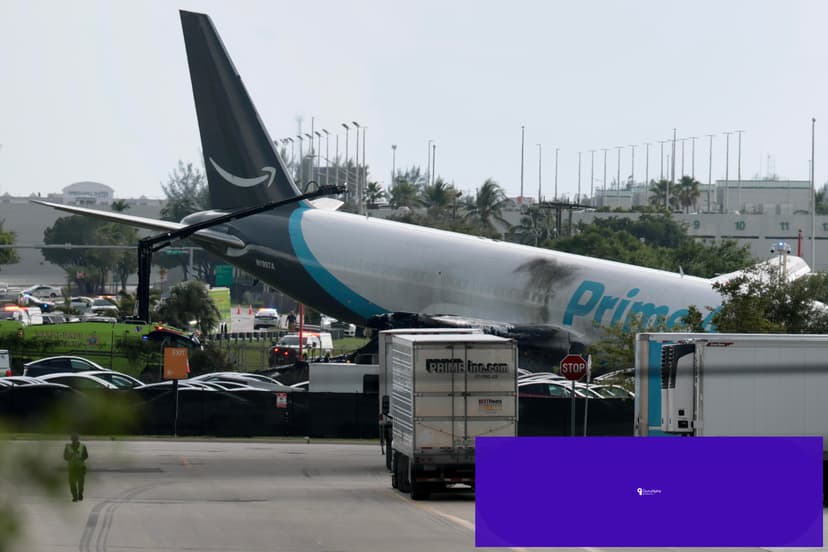
A 21 Air Boeing 767 cargo flight for Amazon overran a Miami runway, injuring several people and halting regional air traffic.
7 September 2026
Local news stalwarts Seattle Times and Newsday sue OpenAI and Microsoft, joining nearly 400 publishers fighting illegal content scraping for AI training.
7 September 2026
Phil Schiller relinquishes App Store control after resisting incoming CEO John Ternus' aggressive strategy to push recurring subscription models.
7 September 2026
American public schools are swapping first-day stress for peer mentors, organized bicycle convoys, and modern architectural spaces to boost student engagement.
7 September 2026
Typhoon Saudel dumped over 500mm of rain on south-east China, triggering embankment failures, deadly landslides, and widespread evacuations across four provinces.
7 September 2026
Forensic ballistics and cellular tracking have tied the absconding suspects in the Ali Jafri torture case to two other residential home invasions.
7 September 2026
Britain's premier luxury carmaker faces thousands of job cuts after the government explicitly ruled out state-funded bailouts ahead of emergency talks.
7 September 2026
GuruAlpha is a comprehensive digital platform offering live financial markets, free calculators, online tools, Islamic content, SIM packages, sports updates and celebrity profiles for Pakistan, Gulf countries and worldwide audiences.
Yes, GuruAlpha is completely free. All calculators, tools, market data, prayer times, Islamic resources and content are available without any subscription or sign-up.
Yes, GuruAlpha provides live market data including USD/PKR exchange rates, gold prices, cryptocurrency prices, stock market indices and commodity prices sourced from reliable financial data providers.
GuruAlpha offers over 1,200 calculators including Pakistan income tax, salary tax, PTA mobile tax, electricity bill, gold price, currency converter, Zakat calculator, property tax and many more.
Yes, GuruAlpha provides accurate prayer times for over 100 cities worldwide including Fajr, Dhuhr, Asr, Maghrib and Isha times. We also offer Qibla direction, Islamic calendar and Zakat calculator.